

Arundells
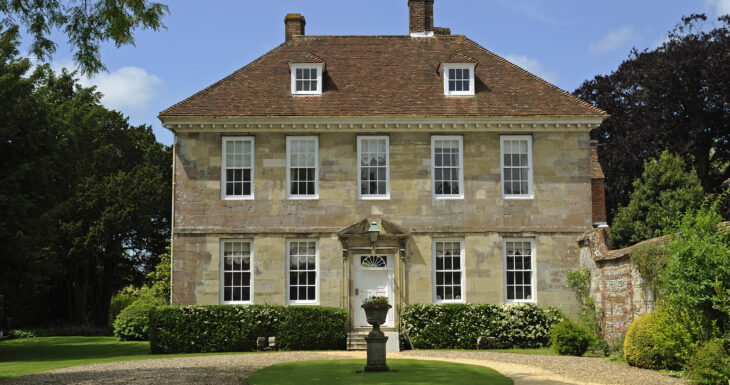
A beautiful Grade II Listed House with two acres of garden in the heart of Salisbury and former home of Sir Edward Heath.
Salisbury SP1 2EN
Accessibility
Wheelchair users
The garden is level and accessible to all, including wheelchair users, dependent upon ground and weather conditions.
Visitor Reception and The Exhibition Room are both on one level and accessible to wheelchair users.
The ground floor of the house is level and accessible. There are five stone steps up to the front door and a ramp is provided for wheelchair access.
Stairs lead up to the upper floor and steps down to the cartoon corridor. These areas are therefore not accessible to wheelchair users or visitors with limited mobility.
An accessible toilet is available on site.
Dogs
Well behaved dogs are permitted within the garden, but must be kept on leads at all times.
Guide and Special Assistance dogs are welcome within the house.
Arundells began life as a medieval canonry within Salisbury’s Cathedral Close. The first known resident was Henry of Blunston, Archdeacon of Dorset, who lived here from 1291 until his death in 1316. For centuries thereafter, it remained home to various church dignitaries, including Canon Leonard Bilson, who gained notoriety in 1571 when he was pilloried and imprisoned for practising sorcery and magic.
In 1609 the property entered a new phase when Sir Richard Mompesson took a lease and carried out extensive restoration. On his death, the house passed via his widow to her family, who retained it until the late 17th century.
Major rebuilding came in 1718 under John Wyndham, whose work gave the house much of its present form. The name “Arundells” itself derives from a later marriage connection: James Everard Arundell, son of the 6th Lord Arundell, wed Wyndham’s daughter Ann, linking the property to one of England’s prominent Roman Catholic families.
Over the years, Arundells has seen many different uses. From 1839 to 1844 it housed the Godolphin Girls’ School, later becoming a boys’ boarding school. During the Second World War, the building served the Red Cross, acting both as a library service centre and as a depot for wool collections.
By the mid-20th century, decades of neglect had left the house in a poor state and demolition was even considered. Its survival owes much to Robert and Charlotte Hawkings, who undertook a major programme of restoration in 1964, rescuing the property and securing its future.
In 1985 Arundells became the home of Sir Edward Heath, former Prime Minister, who lived here until his death in 2005. He left the house and its contents to a charitable foundation, ensuring that his remarkable collections, together with the house and gardens he so loved, would be preserved for the public to enjoy. Today, Arundells remains both a historic home and a unique window into the life and interests of one of Britain’s most prominent statesmen.
Important information: opening info is generated by artificial intelligence; check specific attraction details before travelling.
The indicator above will show ‘open’ when the public have any kind of access to any part of this property. That could be the park, a shop, or a special event, and may not reflect regular admission times to the main attraction. Always consult the website of the house or garden you intend to visit before travelling to check that the attraction you are interested in is open.
Arundells, located at 59 Cathedral Close, Salisbury, is open to visitors from 19 March to 3 November 2026. The opening hours are as follows:
- Monday, Thursday, Friday, Saturday, and Sunday: Open from 10:00 to 17:00 (last entry at 16:00). Visitors can explore the house and garden at their leisure.
- Tuesday: Guided tours are available on the hour, every hour from 10:00, with the last tour at 15:00. Pre-booking is advised.
- Wednesday: Closed.
Admission Charges:
- House & Garden: £12
- Garden Only: £4
- Children under 12: Free
- Tuesday Guided Tours: £15 (no discounts or concessions available).
Discounts are available on free-flow days (Monday, Thursday, Friday, Saturday, and Sunday) for Historic Houses members, Defence Discount Service and Blue Light cardholders, and South Western Railway passengers (conditions apply).
Upcoming events at Arundells include:
- 10 March 2026: Piano Recital by Sophia Benton at 19:00.
- 11 March 2026: Volunteering Open Day from 10:00 to 13:00.
- 25 March 2026: The Arts and Crafts of Napoleonic Prisoners of War at 14:00.
- 2 April 2026: Saving Lives in a Changing World: The RNLI’s Evolving Mission at 19:30.
- 10 April to 12 July 2026: Exhibition: Natural Wonders – Ron Dyson, open daily from 10:00 to 17:00.
Visitors are encouraged to enjoy the house, garden, and collection, which includes works by Churchill and Sargent, Chinese ceramics, and memorabilia from Sir Edward Heath's life.
£10 House & Garden- Free entry for Historic Houses members
£13 Guided Tour (Tue only) Historic Houses card not valid
Contact us on 01722 326546, or [email protected]
Accessibility
Wheelchair users
The garden is level and accessible to all, including wheelchair users, dependent upon ground and weather conditions.
Visitor Reception and The Exhibition Room are both on one level and accessible to wheelchair users.
The ground floor of the house is level and accessible. There are five stone steps up to the front door and a ramp is provided for wheelchair access.
Stairs lead up to the upper floor and steps down to the cartoon corridor. These areas are therefore not accessible to wheelchair users or visitors with limited mobility.
An accessible toilet is available on site.
Dogs
Well behaved dogs are permitted within the garden, but must be kept on leads at all times.
Guide and Special Assistance dogs are welcome within the house.