
The case for National Listed Building Consent Orders
The introduction of National Listed Building Consent Orders could ease backlogs in the planning system while ensuring Britain's heritage is ready for the future.
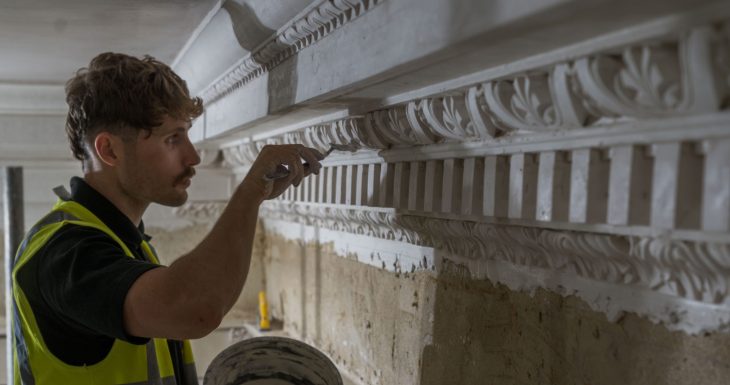
Listed Building Consent (LBC) is one of the mechanisms for ensuring heritage protection in the planning system. But the process of applying – and being granted – Listed Building Consent has become lengthy, unwieldy, and widely disliked by those very people who own, manage and conserve heritage assets on behalf of the nation.
From June 2024 to June 2025, there were 5,700 applications for Listed Building Consent: they are a not-insignificant burden for local authorities. Grosvenor’s 2026 report, Retrofit or Ruin, notes that 93% of LBCs are successful, yet just one-third are determined in the required eight-week timeframe. In 2025, just 28% of applications made by Historic Houses members were determined in the statutory eight-week timeframe, with 34% taking longer than 16 weeks to be determined. It is little wonder that 87% of historic building owners see the UK’s planning system as a major barrier to decarbonising their property.
There is a way to unblock the system, efficiently and effectively, at no cost. Listed Building Consent Orders (LBCOs) were designed to do exactly this: to ensure a level of sufficient heritage protection whilst fast-tracking certain low impact changes to listed buildings. Introduced as a tool by the Enterprise and Regulatory Reform Act 2013, they are a planning mechanism that – in theory – allow owners of listed buildings to make specific, pre-defined changes to their property like the installation of solar panels or secondary glazing. Ultimately, they should permit the streamlining of the planning system by enabling owners to avoid time-consuming applications, while simultaneously easing the burden on local planning authorities.
But not a single national LBCO has come into effect. The implementation of national LBCOs would ease administrative burdens of planning authorities across the country (Grosvenor estimate 30,000 work hours would be saved yearly), reduce their costs (£1 million per year), and give owners of listed buildings certainty when considering certain energy efficiency changes which would encourage investment in carbon-saving retrofit projects.
The introduction of national LBCOs is a simple policy solution that would streamline the planning system while still ensuring the appropriate conservation and stewardship of our precious listed buildings. The government should amend the legislation to allow national LBCOs to be subject to the negative resolution procedure. This would retain parliamentary oversight while streamlining the process.
We are also keen to see national Listed Building Consent Orders developed and implemented for a range of energy-efficiency and low-carbon heating measures. An example of what we mean could be the option of installing secondary glazing in grade II-listed buildings. At present, this remains something of a gray area. Historic England’s excellent advice note on Adapting Historic Buildings for Energy and Carbon Efficiency (HEAN 18) is, ultimately, equivocal on whether listed building consent is required for secondary glazing installations.
The advice in the HEAN says that consent is ‘unlikely’ to be required for ‘most’ installations of secondary glazing to listed buildings (para 80). But such words give the owners of listed buildings little comfort. These owners would still be advised to make a listed building consent application for a secondary glazing installation, since their local authority would retain the ultimate power to determine that the installation does, after all, harm the significance of the building. (The HEAN does not countermand the legislative powers of the local planning authority.)
How much better it would be therefore if there was a simple, one-line national LBCO in operation along the lines “Permission is granted for any secondary glazing installation in any grade II listed building in England”. It would mean certainty for owners seeking to make their grade II homes more energy efficient, while removing unnecessary applications to local planning authority offices. Confining this solely to grade II buildings would ensure that the most significant buildings (grade II* and above) still require listed building consent applications, even for secondary glazing.
National LBCOs could capture property improvements like the installation of secondary glazing to windows, insulation between floors, solar panels, and changing boilers to low carbon alternatives like heat pumps. The impact of this would be huge: both in terms of the potential to upgrade our building stock and ensure heritage is fit for the future, but also in freeing up time for planning and conservation officers at local authorities across the country.
In January, Historic Houses’ Director General, Ben Cowell, wrote to Dame Caroline Dinenage, Chair of the Culture, Media and Sport Committee, to voice the potential benefits of national Listed Building Consent Orders (LBCOs), and we will continue to advocate for the introduction of national LBCOs on low risk measures in the hope that the stewardship of listed buildings is made simpler for owners and more impactful for the country’s heritage.