Historic Houses President Jason Lindsay speaks at National Trust AGM
Historic Houses President, Jason Lindsay, was invited to speak at the National Trust’s Annual General Meeting on 8 November 2025.
Find his full speech below:
Hello everyone. It’s a pleasure to be here, and my thanks to Hilary and Rene for inviting me to speak to you.
My name is Jason Lindsay, and I’m the President of Historic Houses. We are a not-for-profit association of around 1450 significant houses, castles and gardens in the UK, all independently owned. We exist to champion their cause.
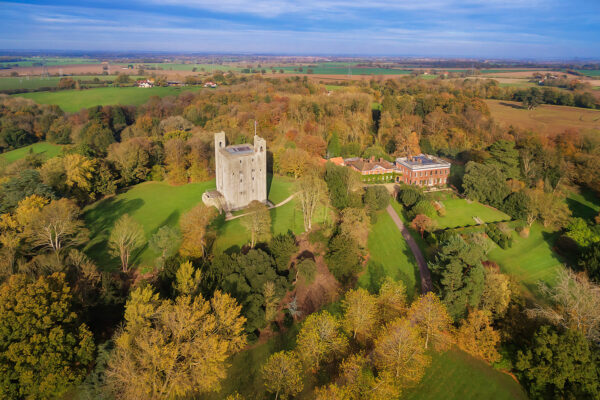
I live at Hedingham Castle in Essex — a 12th-century Norman keep, with an 18th century house nearby. My wife, Demetra, and I have brought our family up there, and we run the Hedingham operation ourselves with a small team. We host around 75 weddings every year, and welcome around 25 thousand visitors. As at many of our members’ places, it’s all very hands-on work. If I wasn’t with you today, I would probably be working in the woods, or clearing up after a wedding reception, or helping on a building project.
And so I know, personally, just how much hard work goes into caring for heritage.
The histories of Historic Houses and the National Trust are closely intertwined. And I have a personal connection with your story.
My grandfather was Chairman of the National Trust between 1945 and 1965. It was a dark time for country houses, when so many of them were being demolished after the war. Thanks to the intervention of the Trust, 200 were acquired and saved. I calculate that over a quarter of these came to the Trust during my grandfather’s time as chairman. Wonderful places like Knole, Osterley, and Attingham.
But the truth is that there are still many more country houses that remain in private and independent ownership, beyond your boundaries.
Many of them look just like National Trust places. They are as rich in history, and significance, and natural beauty.
In fact, with our 1450 houses, Historic Houses represents seven times as many houses as the Trust. Most of them are still lived-in family homes.
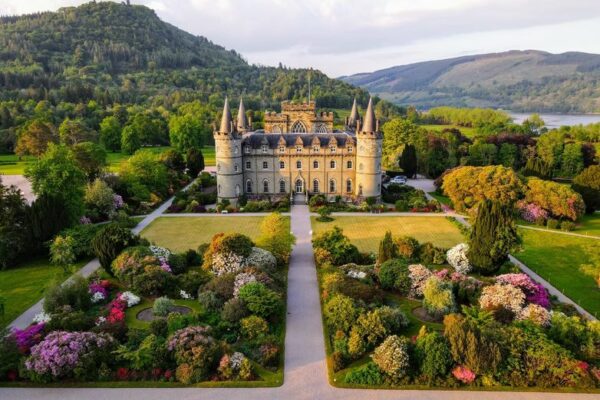
Alongside these houses come some of the nation’s most-loved gardens and landscapes. I visited Inveraray Castle, in Argyll, in September, to celebrate their win of our Garden of the Year Award. Walking along the river that evening, I couldn’t help but be truly grateful to have the chance to enjoy such a remarkable, awe-inspiring landscape, and thankful for those individuals and organisations who devote so much time and effort to looking after them for the rest of us to enjoy.
Each of our owners is looking to do the same thing that you are – generate the resources to look after heritage and nature, for the future.
We all know how important these things are to our wellbeing, to our culture, to our environment and to our economy.
Around 300 of our member houses are open for public access. Many more open more informally, or for events such as weddings, and we attract around 19 million visitors, generating over a billion pounds for the UK economy.
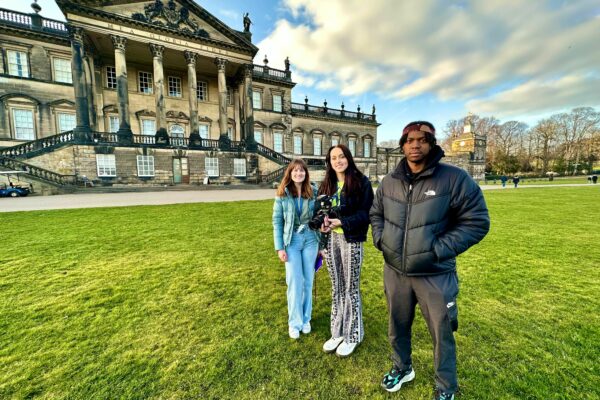
The diversity of businesses found in our member houses is quite astonishing. For some, that might mean safari parks, as at Longleat and Woburn. Or rock concerts like Iron Maiden at Knebworth. Or film sets – like at Highclere Castle – also known as Downton Abbey or Drayton House aka Saltburn.
Enterprise and innovation have enabled many historic houses to survive and thrive. As a result, these houses haven’t had to be rescued by the National Trust.
Our members might be custodians of the past, but they work hard to remain dynamic and relevant in the present. Earlier this year, we published a report on the barriers to accessing heritage for Gen Z audiences. As the parent of Gen Zs, I know that heritage might be a bit of a hard sell for this age group.
But the results of our research were not what we were expecting. While there were some clear barriers preventing some from participating in heritage, we were bowled over by the enthusiasm many of them showed for the past. They love the authenticity and atmosphere of genuine historic places.
Giving people of all ages, from all walks of life, a chance to enjoy the space that our members, and that you, care for, is one of the most rewarding parts of our work.
I was recently at Dove Cottage, the Wordsworths’ home in Grasmere. Note that I said Wordsworths, plural, because their recent reinterpretation has seen Dorothy Wordsworth, William’s sister, given much greater emphasis. Their team are doing an amazing job at unlocking this historic home, the magnificent landscapes it lies in, and the poetry that was written here, for new audiences.
The impact of heritage on the economy has been well documented and quantified. And there are plenty of figures about ‘wellbeing benefits’ in monetary terms. But these do little to tell the real story of the benefits of heritage, and the impact it has on peoples’ lives.
We are always moved when, on wedding show-rounds, couples often say they came to Hedingham on a school visit many years ago. Hedingham has stayed with them, and that they have come back to celebrate such a special day with us is testament to the power of heritage.
So, my message to you today is that, although we are different organisations, we are on the same side. We all work to protect, share, and celebrate the places that matter to people.
I believe we must stand strong, and stand together, in the face of whatever difficulties lie ahead.
The truth is, heritage thrives best not in isolation, but in collaboration, so let’s continue to work closely together and support each other. There is room for all of us. And we are stronger—much stronger—when we stand together.
Thank you.
Hedingham Castle
Castle Hedingham, near Halstead, Essex, CO9 3DJ