Rest Is History Podcast features Soulton Hall: Saints, Secret Codes, and Heretical Bibles
Ground-breaking research by the Byrga Geniht consultancy, supported by the Ashton family, has brought to light an extraordinary Shropshire discovery linking a Tudor country seat to a seventh-century Saxon saint, illicit printed scriptures, and hidden treasures—a story that has now taken centre stage in a major podcast series.
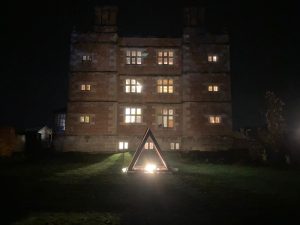
Soulton Hall, located near Wem, Shropshire, is the focus of a special members-only series-finale episode, recorded on 29 July, concluding a recent run of Tudor-themed episodes of The Rest Is History, hosted by historians Tom Holland and Dominic Sandbrook.
Podcast co-host Tom Holland has previously highlighted the estate as a, “special place,” with a, “deeper, hidden story.” The upcoming broadcast looks over revelations that have reshaped the understanding of Tudor Shropshire.
At the centre of the story is what researchers describe as a once-in-a-1,400-year historical breakthrough.
Comprehensive architectural analysis by experts James Wenn and James Syrett of Byrga Geniht revealed that the 1556 layout of Soulton Hall was designed using precise geometric codes. These hidden measurements directly match the lost shrine of Saint Erkenwald—the seventh-century Saxon bishop and Saxon prince who served as the patron figure of medieval London.
When royal authorities ordered the destruction of Erkenwald’s shrine during the religious turmoil of the sixteenth century, the estate’s owner, ‘Old’ Sir Rowland Hill, took action. The former Lord Mayor of London utilised his wealth, status, and intellect to orchestrate a secret campaign of cultural preservation. Active archaeological work is currently taking place in the central courtyard at Soulton Hall, where parch marks and ground signals suggest materials connected to the Saxon bishop were covertly reinterred.
Because Erkenwald lived long before the unified Kingdom of England came into being, confirming the presence of these items represents a moment of profound national importance, connecting the county to the very earliest chapters of English identity.
The covert efforts of Sir Rowland extended to the most dangerous publishing projects of the Tudor age. Operating in the shadows, Hill served as a principal financial patron and legal shield for publishing the 1560 Geneva Bible—a radical, highly illicit translation of scripture deemed treasonous and heretical by authorities for its marginal commentaries that directly challenged the absolute authority of the Crown.
Furthermore, research shows that when tasked with taking down the High Altar of Old St Paul’s Cathedral in 1550, Sir Rowland quietly saved the central altar stone, smuggling it to Shropshire where it remains preserved in a dedicated basement room at Soulton Hall. The significance of the discoveries has been formally recognized at the highest levels, earning a unanimous resolution from Shropshire Council as well as inclusion in the parliamentary record via an Early Day Motion tabled by North Shropshire MP Helen Morgan. Reflecting on the estate’s remarkable structure, lead consultant James D. Wenn noted that Soulton stands as, “a rich and fascinating bridge between sixteenth-century worlds,” adding that few properties anywhere contain, “as many surprises per square foot.” Members of the public interested in seeing the coded hall first-hand can arrange visits through pre-booked heritage tours at the estate.
Related
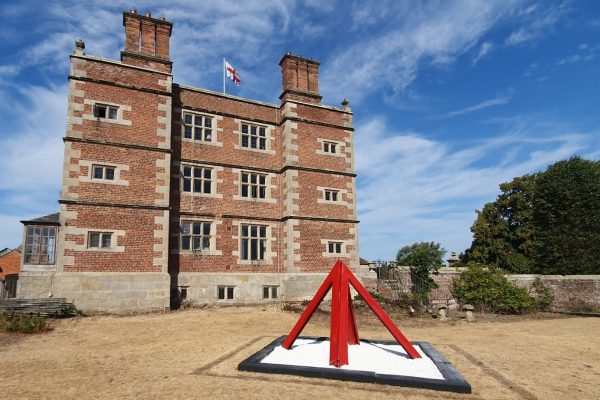
Soulton Hall
Near Wem, Shrewsbury, Shropshire. SY4 5RS


Bowhill House & Grounds
Selkirk, TD7 5ET
Become a Historic Houses member
Explore the nation’s heritage from just £71 per year.
Hundreds of the most beautiful historic houses, castles, and gardens across Britain offer our members free entry.
Also: receive a quarterly magazine, enjoy monthly online lectures, get exclusive invitations to buy tickets for behind-the-scenes tours, and take up a range of special offers on holidays, books, and other products you might like.